
japanese computer brands remain relevant in business notebooks, lightweight mobile PCs, rugged field computers, and Japan-focused consumer systems. The familiar names do not all have the same ownership, manufacturing footprint, or global availability, so a useful comparison must go beyond the logo.
This guide explains which brands are active, what each is known for, and how to check whether a particular model is actually made in Japan. It also connects the finished computer to the motherboard, power electronics, connectors, and other assemblies that determine reliability.
What Are Japanese Computer Brands?
Japanese computer brands are PC names that originated in Japan or continue to operate through a Japanese company, product organization, or market channel. That definition includes independent brands such as VAIO, established corporate brands such as Panasonic, and brands operating through international partnerships such as NEC and Dynabook.
Brand origin does not prove that every model is designed, assembled, or supported in the same country. Buyers should verify the legal manufacturer, model label, warranty region, keyboard layout, power adapter, and support channel for the exact machine.
Japanese Computer Brands List
A practical japanese computer brands list should focus on active PC product lines rather than historical names that no longer sell current computers.
| Brand | Current PC focus | Useful for |
|---|---|---|
| VAIO | Premium and business mobile notebooks | Portable professional systems and Japan-centered design |
| Dynabook | Consumer and business laptops | Mobile work, education, and managed business fleets |
| Panasonic | TOUGHBOOK rugged laptops and tablets; Let’s note mobile PCs | Field service, public safety, utilities, and demanding travel |
| NEC | LAVIE consumer PCs and VersaPro/Mate business systems | Japan-market home, office, and institutional deployments |
| Fujitsu | Personal and business computers within a broader computing portfolio | Enterprise procurement and Japan-market PC requirements |
Which Are the Best Japanese Computer Brands?
The best japanese computer brands depend on the job: VAIO and Dynabook suit mobile office users, Panasonic is the stronger starting point for rugged field deployment, and NEC or Fujitsu may fit organizations that value established Japanese enterprise channels.
- Choose VAIO when portability, business styling, and Japan-centered product engineering matter.
- Choose Dynabook when you need a broad notebook range for home, education, or managed business use.
- Choose Panasonic TOUGHBOOK when impact, dust, moisture, modularity, or field serviceability are central requirements.
- Choose NEC when buying for Japan-market users who need LAVIE, VersaPro, or Mate product support.
- Consider Fujitsu when the PC purchase is part of a broader enterprise computing relationship.
List of Japanese Laptop Brands by Buyer Type
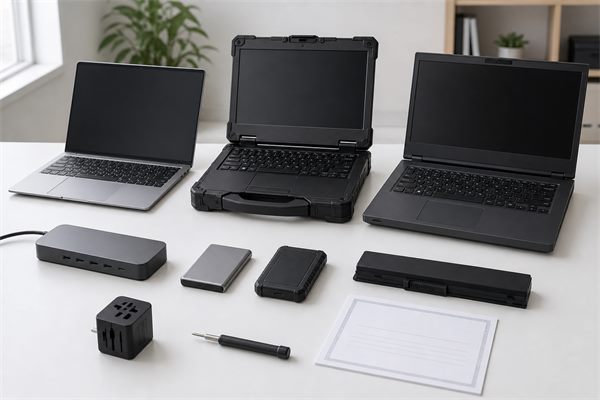
This list of japanese laptop brands is most useful when it is organized around deployment conditions rather than prestige. A thin office notebook and a sealed field computer solve different engineering problems.
| Buyer need | Brands to examine first | Main checks |
|---|---|---|
| Lightweight business travel | VAIO, Dynabook, Panasonic Let’s note | Weight, ports, battery options, keyboard, warranty region |
| Rugged field operation | Panasonic TOUGHBOOK | Ingress rating, drop testing, operating temperature, replaceable modules |
| Japan-market consumer use | NEC LAVIE, Dynabook, VAIO | Language, software bundle, local repair, power adapter |
| Corporate fleet procurement | Dynabook, NEC, Fujitsu, Panasonic | Lifecycle, image deployment, spare parts, security, service agreement |
Are Any Laptops Made in Japan?
Yes, some laptop models or configurations are assembled in Japan, but are any laptops made in japan cannot be answered reliably at brand level. Production location can vary by model, generation, destination market, and configuration.
Check the country-of-origin label on the exact unit or packaging and confirm it with the regional seller. Phrases such as “Japanese brand,” “designed in Japan,” “quality inspected in Japan,” and “made in Japan” describe different facts and should not be treated as interchangeable.
What Happened to Toshiba, Sony, and Fujitsu PC Brands?
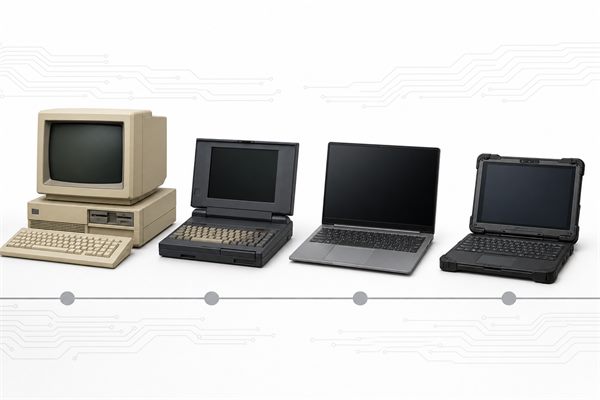
Several well-known Japanese PC names changed structure rather than simply disappearing. Sony separated its VAIO PC business in 2014, after which VAIO continued as an independent company. Toshiba’s former PC business evolved into Dynabook, while NEC’s PC operations became part of the NEC Lenovo Japan partnership.
Fujitsu still presents personal computers within its computing portfolio, but buyers should confirm the current selling entity and service coverage in their own country. Historic brand recognition alone is not enough for a current purchasing decision.
How Should You Compare Japanese Laptop Brands?
Compare Japanese laptop brands by the exact deployment requirement, regional support, and total lifecycle cost—not by country of origin alone.
- Confirm the model is officially sold and warrantied in your country.
- Check keyboard layout, operating-system language, cellular bands, and power specifications.
- Compare repair turnaround, parts availability, firmware support, and battery replacement.
- Match ports, docking, graphics, memory, storage, and ruggedness to the real workload.
- For business fleets, evaluate image management, security controls, model lifecycle, and service agreements.
What Electronics Are Inside a Laptop?
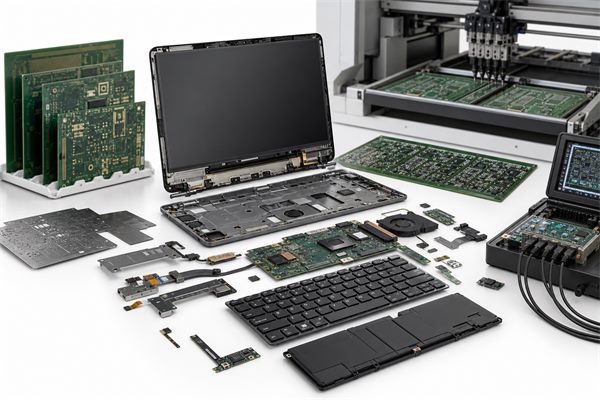
A laptop contains a densely integrated motherboard, power-conversion circuits, memory and storage interfaces, display and camera connections, wireless modules, sensors, and thermal-control electronics. The board must balance signal integrity, power density, mechanical limits, and heat within a thin enclosure.
The distinction between a circuit board and motherboard matters when diagnosing or specifying the assembly. A complete computer may use several supporting boards in addition to the main logic board, including USB, audio, battery, keyboard, and indicator assemblies.
What Should Hardware Teams Learn from Japanese PC Design?
Hardware teams can learn from the emphasis on mechanical integration, service access, mobile power management, connector durability, and product-specific validation seen across Japanese PC categories. Those priorities must be translated into measurable PCB and PCBA requirements.
Before building a computer-related electronics prototype, define the layer stack, impedance requirements, component height limits, connector cycles, thermal path, test access, and enclosure constraints. A PCB prototype for a Japan-focused project still requires complete fabrication and assembly data; the market destination does not replace engineering documentation.
FAQ About Japanese Computer Brands
Is VAIO still a Japanese computer brand?
Yes. VAIO Corporation is based in Japan and has operated independently from Sony since 2014.
Is Dynabook the same as Toshiba?
Dynabook grew from Toshiba’s former PC business, but current products are sold under the Dynabook company and brand structure.
Does Panasonic still make laptops?
Yes. Panasonic Connect currently offers TOUGHBOOK rugged laptops and tablets, with products aimed at field and mission-critical work.
Does NEC still sell computers?
Yes. NEC presents consumer and business PC products in Japan, including LAVIE, VersaPro, and Mate families.
Are Japanese laptops sold worldwide?
Availability varies significantly. Some brands and models are Japan-focused, while others have regional business channels. Confirm the local seller and warranty before ordering.
Is a Japanese brand always made in Japan?
No. Brand origin, design location, component sourcing, final assembly, and quality inspection can occur in different countries.
Can a Japan-market laptop be used in the United States?
Often yes, but check keyboard layout, adapter input, wireless approvals, operating-system language, warranty coverage, and repair support.
Which Japanese brand is best for rugged work?
Panasonic TOUGHBOOK is the clearest current starting point because the line is designed around rugged and field-use requirements.
Which Japanese brands make lightweight business laptops?
VAIO, Dynabook, and Panasonic’s Let’s note range are useful brands to compare, subject to regional availability.
Why did many Japanese PC brands change ownership?
The PC market consolidated as global scale, supply-chain efficiency, and narrower margins became more important. Individual business transfers and joint ventures preserved some brands under new operating structures.
How Can EBest Circuit Support Computer Electronics Projects?
Japanese computer brands illustrate how much performance depends on the electronics beneath the enclosure. At EBest Circuit, we support PCB fabrication, component sourcing, PCB assembly, and testing for computer-related control, interface, power, and communication boards.
If you are developing a new electronics assembly, send the Gerber files, BOM, quantity, test requirements, and mechanical constraints to sales@bestpcbs.com. We can review the manufacturing package and help move the design from prototype to a controlled build. For broader context, see our guide to the computer circuit board.
For quick reference, bookmark this Japanese computer brands guide when comparing brand history, current product focus, and manufacturing claims.
Tags: are any laptops made in japan, best japanese computer brands, japanese computer brands, japanese computer brands list, list of japanese laptop brands
PakarPBN
A Private Blog Network (PBN) is a collection of websites that are controlled by a single individual or organization and used primarily to build backlinks to a “money site” in order to influence its ranking in search engines such as Google. The core idea behind a PBN is based on the importance of backlinks in Google’s ranking algorithm. Since Google views backlinks as signals of authority and trust, some website owners attempt to artificially create these signals through a controlled network of sites.
In a typical PBN setup, the owner acquires expired or aged domains that already have existing authority, backlinks, and history. These domains are rebuilt with new content and hosted separately, often using different IP addresses, hosting providers, themes, and ownership details to make them appear unrelated. Within the content published on these sites, links are strategically placed that point to the main website the owner wants to rank higher. By doing this, the owner attempts to pass link equity (also known as “link juice”) from the PBN sites to the target website.
The purpose of a PBN is to give the impression that the target website is naturally earning links from multiple independent sources. If done effectively, this can temporarily improve keyword rankings, increase organic visibility, and drive more traffic from search results.